
Bannock County Probate Court Role
Probate in Bannock County is not routed to a separate county probate court. The State Court Structure Map identifies the local probate court name as the Probate Division of the Magistrate Division. That means probate sits inside the District Court system, alongside other magistrate work such as small claims, misdemeanors, traffic, family matters, guardianships, conservatorships, and preliminary felony proceedings. The Idaho iCourt hearing search supports this structure by offering a "Bannock - Probate or Mental Health" hearing type.
Probate records can include estate filings, wills, appointments, inventories, accountings, distributions, guardianship status reports, conservator accounting reports, civil protective filings, and related orders. Some entries may appear as public case or hearing information. Some documents may not be public because they involve minors, protected persons, medical facts, mental health proceedings, adoption or termination issues, or sealed information. Older files may require Archives rather than a simple online search.
Bannock County Probate Terms
Probate records use terms that describe a person's role in the estate or protective case. These terms also help when filling out a judicial records request because the court asks for case type, case name, requested documents, and the requester's reason or relationship when the file is restricted.
- Testator
- A person who made a will.
- Executor
- A person named to carry out a will, often called a personal representative in estate practice.
- Intestate
- A person died without a valid will, so state law controls estate distribution.
- Guardianship
- A court appointment giving a guardian care, custody, and control of a protected person.
- Conservatorship
- A court appointment giving a conservator authority to manage a protected person's estate.
Search Bannock County Probate Hearings
Start with the statewide Idaho iCourt tools for public case and hearing information. Search by case number when known. For people, try the decedent, protected person, petitioner, respondent, or other party names. Use the hearing search when the goal is to confirm a calendar setting rather than locate a document. If a probate or guardianship file is not visible, it may be too old for the portal, entered under different spelling, sealed, confidential, or held locally by the courthouse.
- Use iCourt Smart Search for a name, business name, or case number, and narrow the location to Bannock County.
- Use Search Hearings with location set to Bannock County and hearing type set to Bannock - Probate or Mental Health.
- For documents, use the judicial records request form and select Guardianship/Conservatorship or Other as the case type.
- Give the case number, case name, requested document names, file dates when known, and hearing dates if audio is requested.
- Contact Civil Court Information or Archives when the file is old, not visible online, or needs local staff review.
Bannock County Guardianship Records
Bannock County publishes a dedicated Guardianship and Conservatorship resource for local monitoring. The county explains that a guardian is responsible for the care, custody, and control of the person, while a conservator manages the estate. The county's monitoring program is meant to help protect people from abuse, neglect, or exploitation, help appointed persons understand duties, use more streamlined forms and policies, and monitor care through a third-party reporting system.
The county guardianship and conservatorship page is the official source for the local monitoring program.
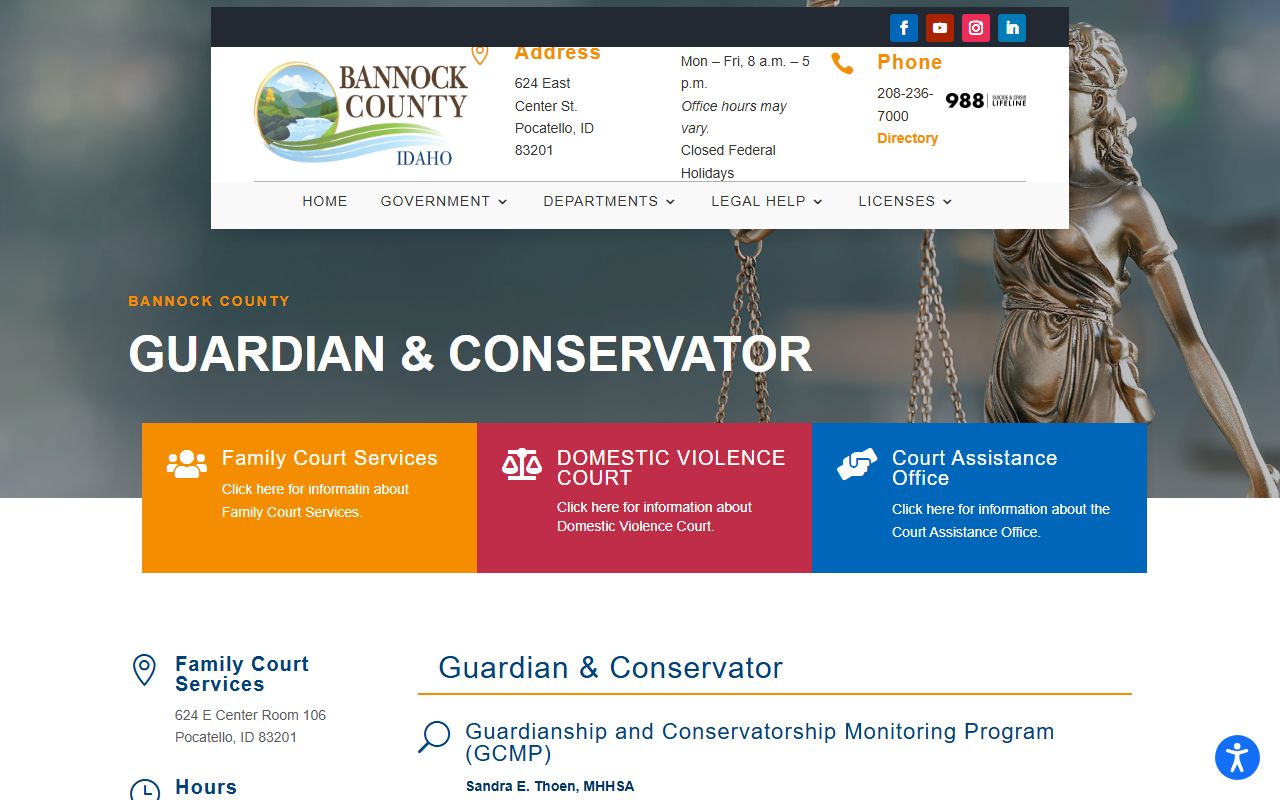
That program makes guardianship and conservatorship records a major part of Bannock County probate access, not a side topic.
Annual reports are due on the anniversary date of appointment. A guardian must complete a Guardian's Status Report, and a conservator must complete a Conservator's Accounting Report. Bannock County lists workshop services and 1:1 question-and-answer sessions, but the coordinator cannot give legal or fiscal advice. For appointments, the county lists 208-236-7422.
Bannock County Probate Contacts
Probate access can involve several courthouse contacts because the same District Court system holds probate, civil, family, and guardianship/conservatorship files. The Clerk of the District Court is the local records fallback for documents and certified copies. Civil Court Information and Archives are useful when the question is about a civil/probate file location or an older record.
Probate Division of the Magistrate Division
Bannock County Courthouse
624 East Center Street
Pocatello, ID 83201
208-236-7000
Clerk of the District Court
624 East Center, Room 211
Pocatello, ID 83201
208-236-7358
Monday-Friday, 8:00 a.m.-5:00 p.m.
Civil Court Information and Archives
Civil: Room 108, 208-236-7077
Archives: Room 107, 208-236-7279
624 East Center, Pocatello, ID 83201
Bannock County Probate Copy Fees
The official local research found judicial copy, certification, and audio fees, but it did not locate a Bannock-specific probate filing fee schedule. Do not rely on unverified filing amounts for estate petitions, guardianships, or conservatorships. Confirm filing costs with the Clerk before submitting a new probate matter. The researched copy and audio fees are still useful once a probate record already exists.
| Item | Amount or rule |
|---|---|
| Judicial copy page | $1 per page |
| Judicial certification stamp | $1 per stamp |
| FTR court audio | $10 per CD, jump drive, and/or hearing |
| More than one audio disk or drive | Additional charge may apply |
| Probate filing fees | Research gap: confirm current filing fees with the Clerk |
Bannock County Small Estates
Small estates are a state-law probate topic, not a county-only rule. The research identifies Idaho Code 15-3-1201 as the relevant small-estate affidavit statute. Confirm the current threshold and requirements directly from the statute or the Clerk before relying on a small-estate process, especially if real property, creditor claims, or disputed heirs are involved.
The Idaho statute page was one of the probate sources captured for Bannock County research.
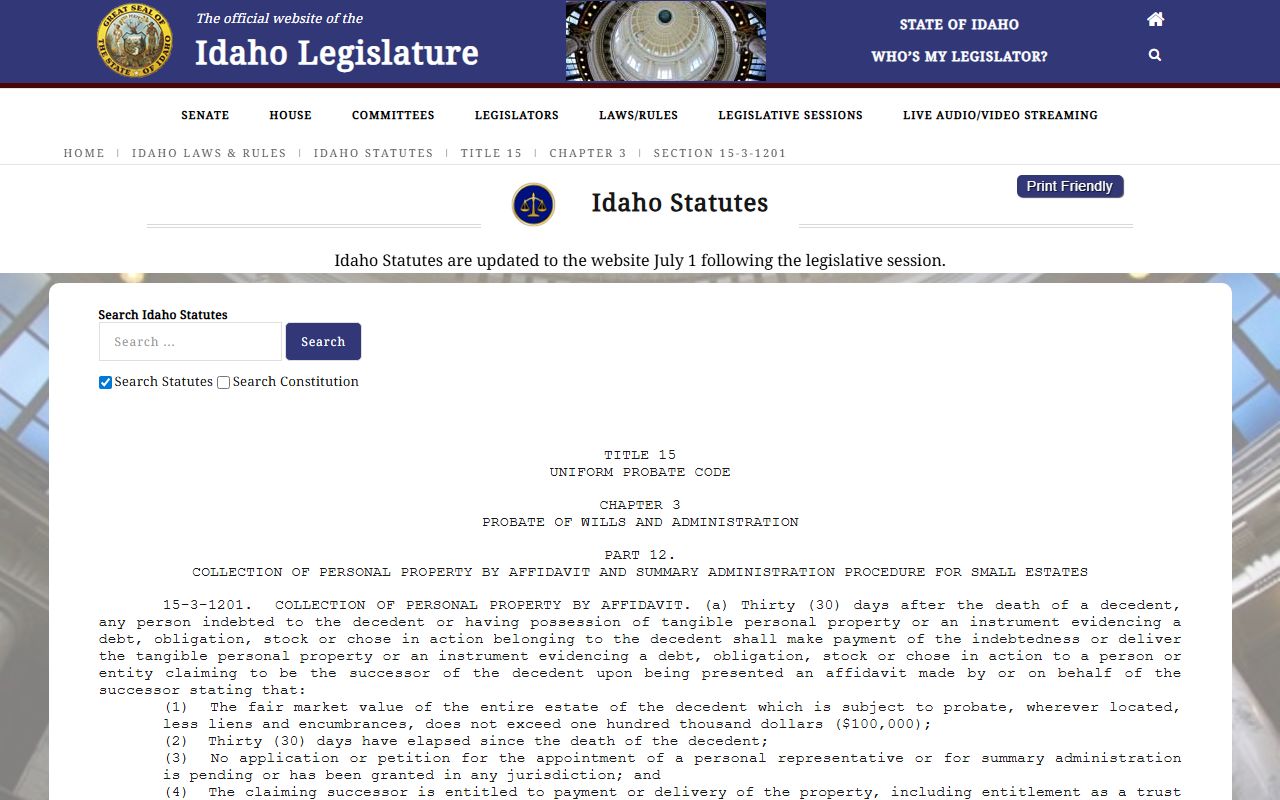
Small-estate authority can affect whether a formal probate case is needed, but it should not be treated as a substitute for case-specific legal review.
Restricted Bannock County Probate Records
Protective probate matters can have public and nonpublic parts. Guardianship, conservatorship, minor-related filings, mental health proceedings, medical information, financial account information, and sealed orders may require judge or custodian review. The judicial records request form specifically asks for a reason for request and relationship to case when an exempt, sealed, or confidential document is requested.
Civil protection-order law may also overlap with protective court records. The research includes Idaho Code 39-6304 because Bannock County's Domestic Violence Court and civil protection-order context can intersect with family and protective proceedings.
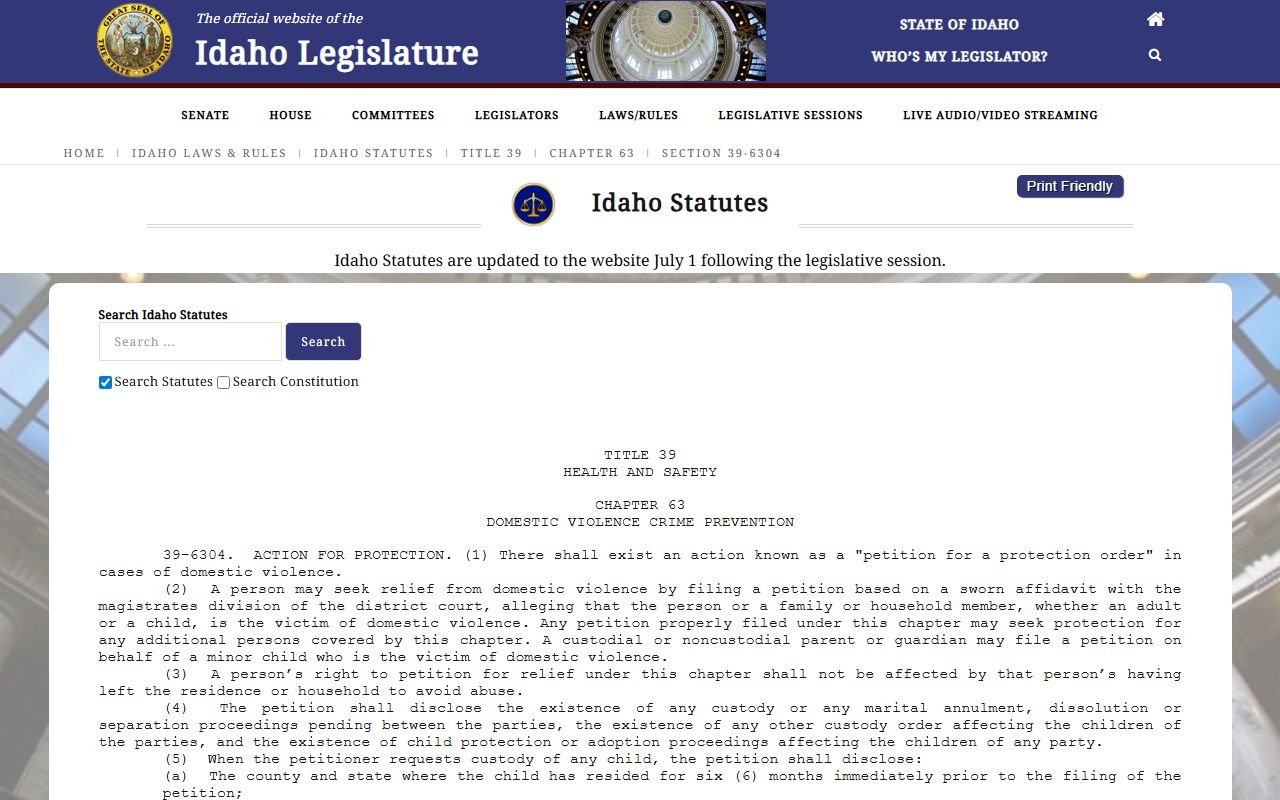
The protection-order statute is not an estate filing rule, but it helps explain why some protective court files have access limits.
Bannock County Protective Courts
Some probate-adjacent records sit near treatment, family, or protective court work rather than estate administration. Bannock County Problem-Solving Courts are treatment-focused programs designed to reduce jail and prison overcrowding, reduce alcohol and drug dependency, improve accountability, and reduce recidivism. Mental Health Court is described as a voluntary post-conviction program for offenders with mental illness who need a structured treatment and supervision model.
The Problem Solving Courts page documents treatment-court goals and local coordinator contacts.
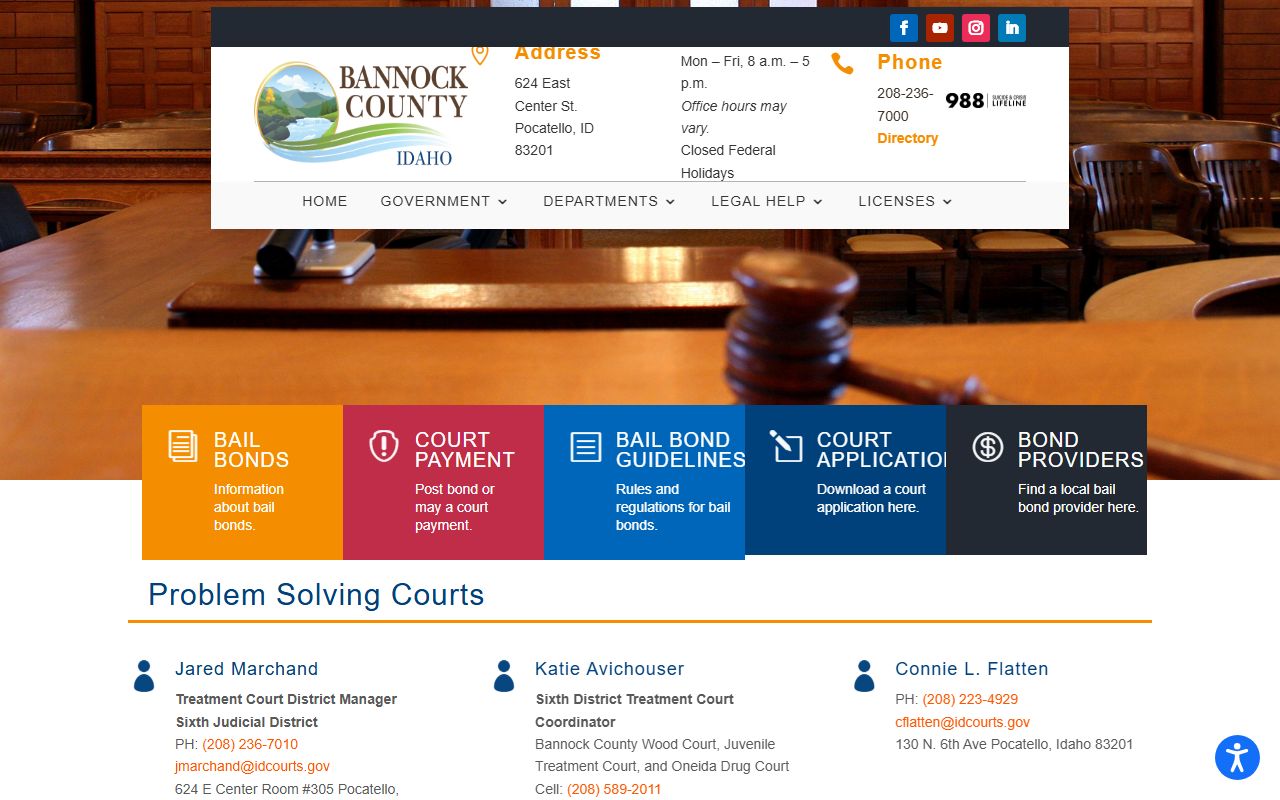
These programs are not a general estate-record search, but they explain why mental health or protective matters may have separate handling.
Bannock County also has a Domestic Violence Court using a "one family one judge" model, victim services, centralized case management, and a fast-track misdemeanor docket. Hon. Carol Tippi Jarman is named for that court, and coordinator Kimberly Talbot is listed at Room 106, 208-236-7421.
The Domestic Violence Court page was captured as a probate-related protective-court source.
Domestic violence records are not probate records, but they can affect family, protection, and confidentiality questions in the same courthouse system.
Note: Mental health and protective files may show a hearing category without making the underlying documents public.